
How Flexible PCBs Are Used in Medical Devices
Flexible PCBs
PCBs play a pivotal role in medical technology, allowing devices like heart monitors and IV therapy infusion pumps to work. They’re a crucial component in medical advancements that are helping people live longer, healthier lives and combat health conditions that can be life-threatening. This is all thanks to dedicated healthcare professionals and advanced technology. And as the industry continues to innovate and evolve, flexible pcbs will continue to power the technology behind these life-saving devices.
Whether your medical device requires rigid-flex or flexible pcbs, the key to getting it right is the design process. During this phase, you’ll begin by creating a schematic or layout of your board’s components and their connections with each other. This can be done using a program that allows you to draw and place your circuit components on the layout, as well as add labels, identifiers, markings, or reference designators for each individual component.
Once your design is complete, you’ll start by drilling holes into the flex substrate, which will require an ultra-precise laser penetration method. These holes will then be filled with copper using a through-open plating procedure. Once the holes are filled, your flex PCB will be ready for the photosensitive engraving opposes covering and carving processes, which will allow you to create the circuit pathways that connect your components. These are called traces, and they’re typically made of thin copper layers that conduct electrical signals.
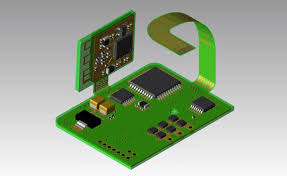
How Flexible PCBs Are Used in Medical Devices
One of the biggest advantages that flex PCBs offer medical equipment is their sensitivity to temperature changes. This makes them ideal for applications that must operate in a range of environments, including hospitals and other healthcare settings where the temperature is often changing. Additionally, flex PCBs are great for minimizing the number of points where the connections between circuit boards can fail. This is particularly important for medical wearables and implantables, where points of failure are a common source of electronic malfunctions.
Finally, flex PCBs are also well-suited to miniaturization. This is an essential element of many medical devices, as it can reduce the size of a finished product and make it more comfortable for a patient to wear or insert. This feature has already been seen in a wide variety of medical devices, from a wristwatch that keeps tabs on heart and circulatory system data to a prosthetic eye that can help restore sight for those with vision impairments.
Another example of a breakthrough medical device that relies on flexible PCB technology is the bionic eye, which is designed to connect retinal sensors with electronic hardware in order to restore vision for those with blindness. This is possible because of the flexibility and reliability that flex circuits offer, enabling a device to integrate seamlessly with the body’s biological systems. Similarly, the use of flex circuits in projects aimed at restoring human senses is allowing for groundbreaking developments such as robotic hands that can pick up vibrations and pressure sensations to allow users to feel textures and other tactile elements.