
Can ceramic printed circuit boards be used in RF applications?
ceramic printed circuit boards be used in RF applications
RF applications require high-speed data and signal transmissions. This type of PCB requires a durable material that can withstand extreme temperatures and pressure. Ceramic is a great option because of its thermal conductivity, low coefficient of expansion (CTE), and mechanical intensity. It also handles a wide frequency range and is resistant to erosion. In addition, it is very durable and can be used for long periods of time.
A ceramic PCB is a multi-layer ceramic printed circuit board that uses a substrate made of various materials such as aluminum oxide, aluminum nitride, beryllium or beryllia nitride, silicon carbide, and boron nitride. It is usually more expensive compared to traditional PCBs that use FR4. The cost is primarily due to the specialized ceramic materials and manufacturing processes involved.
The process of making a ceramic PCB involves creating the design using computer-aided software and adding components, traces, and vias to the layout. The ceramic base is then cut, shaped, and polished to meet the desired dimensions and surface finish. Then, the conductive and insulating layers are applied to the surface of the substrate using screen printing and other techniques. Vias, which are the holes that connect different layers of the board, are drilled with laser or mechanical drilling methods. The board is then fired in a high-temperature furnace to sinter the conductive and insulating layers and fuse them together.
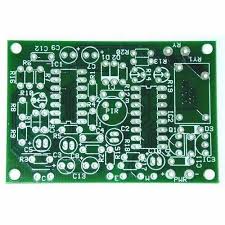
Can ceramic printed circuit boards be used in RF applications?
Copper is plated onto the surface of the ceramic to create the electrical path between components. Various methods are used to deposit copper on the ceramic substrate, including physical vapor deposition (PVD) and deposition by chemical etching. The thickness of the copper varies from 10 mm (3/3oz) to 140 mm (4oz).
To reduce the parasitic capacitance of circuit traces, a thin layer of gold is deposited on the surface of the ceramic. This improves the performance of the circuit board by reducing the transmission delay and impedance. It can also increase the speed and accuracy of the signal.
Ceramics have a high thermal conductivity, which means they can distribute heat quickly across the surface of the board. This is useful in devices that need to operate at high temperatures, such as those used in the military and heavy equipment industries. The ability to disperse heat prevents the inner circuits from overheating, which would otherwise damage them.
Another benefit of ceramics is their mechanical strength, which makes them suitable for high-speed and high-power applications. The material is resistant to corrosion and can withstand high pressure. They can even withstand vibration and shock, which is useful in vehicles and aircraft. In addition, the boards have a low CTE value, which allows them to operate at a higher temperature range than other PCBs. They can be used in a variety of applications, including consumer electronics, medical equipment, and aerospace devices. For this reason, they are commonly used in a number of industries. However, there are a few issues with using ceramic PCBs, including their inherent brittleness and high cost.