
Can Rigid Flex Printed Circuit Boards Be Used Underwater?
Rigid Flex Printed Circuit Boards Be Used Underwater
Printed circuit boards (PCBs) are critical for connecting electronic components, providing them with power and transmitting information. They are used in a wide variety of applications such as mobile phones, tablets, laptops, GPS devices, heart monitors, MRI systems, temperature sensors and control tower instrumentation. PCBs can be made from a variety of materials, including rigid or flexible polyimide or FR-4 fiberglass, which are often combined to create a hybrid rigid-flex board for optimum performance and reliability.
rigid-flex printed circuit board are the ideal choice for many applications in which vibration and shock could damage a traditional PCB. These boards are comprised of a rigid part that connects to components using soldering, with a flexible section that can be bent and folded around the component for a direct connection without additional wire assemblies.
A rigid-flex PCB can help reduce costs by eliminating the need for extra connectors and cable assemblies that require more space and cost more to design and manufacture. It can also save money by reducing assembly time, testing time and rejects/reworking time. The flexibility of a rigid-flex PCB can allow it to fit into tight spaces and tight corners, which may be impossible for a rigid PCB to do.
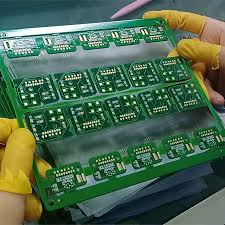
Can Rigid Flex Printed Circuit Boards Be Used Underwater?
The cost of a rigid-flex PCB can vary depending on the number of layers, materials and processes involved in production. A webinar by Epec Engineered Technologies showed that the manufacturing process of a rigid PCB involves 8 steps while a flex PCB requires 17. The price can also increase when there is a need for selective plating, dual surface finish or special requests.
In addition to a reduced cost, the use of rigid-flex PCBs can lead to a lower product weight and improved thermal performance. These features make them ideal for use in environments such as aerospace and automotive. They can also withstand high temperatures, radiation, heat, mechanical stress, shock and vibration.
Another advantage of a rigid-flex PCB is its resistance to electromagnetic interference (EMI). Rigid-flex circuits can shield sensitive electronic components from external electromagnetic fields that can cause interference or malfunctions. They can also prevent electromagnetic waves from passing through the circuit board, which is important for maintaining stability and accuracy.
In conclusion, rigid-flex printed circuit boards represent a revolution in electronic design, offering unparalleled flexibility, reliability, and performance in a compact and lightweight package. As technology continues to evolve, the demand for these innovative PCBs will only grow, driving further innovation and pushing the boundaries of what’s possible in electronics design and manufacturing.
While a rigid-flex circuit board can offer a variety of benefits for your application, it’s important to weigh the advantages and disadvantages before choosing it as the best solution for your product. Rigid-flex circuits typically take longer to produce, require specialized fabrication techniques and expertise, and are not suitable for low-volume production runs. They are best suited for medium- to high-volume production and prototyping.