
What role does solder reflow profiling play in Flexible printed circuit manufacturers?
solder reflow profiling play in Flexible printed circuit manufacturers
Solder reflow profiling plays a crucial role in the manufacturing process of flexible printed circuits (FPCs), ensuring the precise control of temperature profiles during the reflow soldering process. Reflow soldering is a key step in FPC assembly, where solder paste is melted to form solder joints between components and the flexible substrate. The reflow profiling process involves carefully monitoring and controlling the temperature of the assembly throughout the reflow soldering cycle to achieve optimal solder joint formation and prevent defects.
One of the primary functions of solder reflow profiling is to ensure uniform heating of the flexible printed circuit manufacturers assembly during reflow soldering. Temperature variations across the assembly can lead to uneven solder joint formation, component damage, or substrate warping. Reflow profiling allows manufacturers to establish temperature profiles that gradually ramp up to the reflow temperature, maintain consistent temperatures during the soaking period, and gradually cool down to solidify the solder joints. By controlling the temperature profile, manufacturers can minimize thermal gradients and ensure uniform heating of the FPC assembly, reducing the risk of defects such as tombstoning, bridging, or solder voids.
Moreover, solder reflow profiling enables manufacturers to optimize the reflow process parameters for specific FPC designs and materials. Different FPC designs, substrate materials, and component types may require variations in reflow temperature, ramp rates, and soak times to achieve optimal soldering results. Reflow profiling allows manufacturers to experiment with different process parameters and fine-tune the temperature profile to meet the requirements of each unique FPC assembly. This customization ensures that solder joints are formed reliably and consistently, resulting in high-quality FPCs with excellent electrical and mechanical performance.
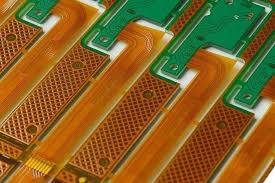
What role does solder reflow profiling play in Flexible printed circuit manufacturers?
Additionally, solder reflow profiling plays a critical role in preventing thermal damage to the flexible substrate and components during reflow soldering. Flexible substrates used in FPCs, such as polyimide, have temperature limitations that must be carefully managed to avoid degradation or delamination. Excessive heat can also damage sensitive electronic components or lead to solder joint defects. By establishing precise temperature profiles tailored to the thermal characteristics of the FPC assembly, manufacturers can ensure that the reflow process does not exceed the temperature thresholds of the materials and components, thereby safeguarding their integrity and reliability.
Furthermore, solder reflow profiling is essential for achieving consistent and repeatable soldering results in high-volume production environments. By standardizing the reflow process parameters based on optimized temperature profiles, manufacturers can ensure consistency in solder joint quality across multiple FPC assemblies. This consistency is critical for meeting quality standards, reducing rework rates, and improving overall production efficiency. By monitoring and recording temperature profiles during reflow soldering, manufacturers can also establish process controls and identify any deviations or abnormalities that may affect solder joint quality.
In conclusion, solder reflow profiling plays a pivotal role in the manufacturing process of flexible printed circuits, ensuring uniform heating, optimized process parameters, prevention of thermal damage, and consistent soldering results. By carefully controlling the temperature profile during reflow soldering, manufacturers can achieve high-quality solder joints with excellent electrical and mechanical properties. This precision and control are essential for producing reliable and high-performance FPCs that meet the stringent requirements of modern electronic applications.