
What role does stencil printing play in printed circuit board assembly?
printing play in printed circuit board assembly
Stencil printing is a crucial step in the Printed Circuit Board Assembly (PCBA) process, playing a fundamental role in the accurate deposition of solder paste onto circuit boards. This process is essential for creating the precise connections needed to mount electronic components onto the board, ensuring proper functionality and reliability of the final product. Stencil printing involves the use of a stencil, typically made of stainless steel or polymer, with apertures or openings that correspond to the locations where solder paste will be deposited onto the circuit board.
The primary function of stencil printing is to accurately transfer solder paste onto the surface of the circuit board in predefined patterns, following the layout of the components to be assembled. The stencil acts as a mask, allowing solder paste to be deposited only onto specific areas of the board where components will be placed. This precise deposition is critical for ensuring proper soldering and electrical connections between components and the printed circuit board assembly.
Stencil printing is typically performed using a stencil printer, a specialized piece of equipment designed for high-precision solder paste deposition. The printer uses a squeegee or blade to spread solder paste evenly across the surface of the stencil, forcing the paste through the apertures and onto the circuit board below. The stencil is held in place over the board, ensuring accurate alignment between the apertures and the corresponding component pads.
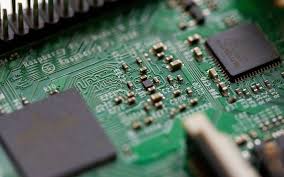
What role does stencil printing play in printed circuit board assembly?
One of the key advantages of stencil printing is its ability to control the volume and thickness of solder paste deposited onto the circuit board. The design of the stencil, including aperture size, shape, and spacing, can be optimized to achieve the desired solder paste volume and thickness for each component pad. This control is essential for ensuring proper solder joint formation and avoiding issues such as insufficient or excessive solder, which can lead to soldering defects and reliability issues.
Stencil printing also plays a critical role in the miniaturization of electronic devices by enabling the assembly of components with increasingly smaller footprints and tighter spacing. As electronic devices become smaller and more compact, the accuracy and precision of solder paste deposition become even more important to ensure reliable connections between components. Stencil printing allows manufacturers to achieve high-density assemblies with fine-pitch components and complex circuit designs, meeting the demands of modern electronics.
Furthermore, stencil printing facilitates the implementation of advanced soldering techniques such as reflow soldering, which is used to create permanent solder joints between components and the circuit board. During reflow soldering, the circuit board assembly is heated to temperatures above the melting point of the solder paste, causing the solder to reflow and form metallurgical bonds with the component pads and circuit traces. Proper deposition of solder paste via stencil printing is essential for achieving uniform heating and solder joint formation during the reflow process.
In conclusion, stencil printing is a critical process in Printed Circuit Board Assembly, enabling the accurate deposition of solder paste onto circuit boards for the assembly of electronic components. By providing precise control over solder paste volume and thickness, stencil printing ensures reliable solder joint formation and facilitates the assembly of high-density, miniaturized electronic devices. As electronic technologies continue to advance, stencil printing will remain an essential tool for achieving high-quality, reliable circuit board assemblies.